Combined Use Of The Africa CDC Maturity Scorecard And The NPHI Staged Development Tool In Malawi
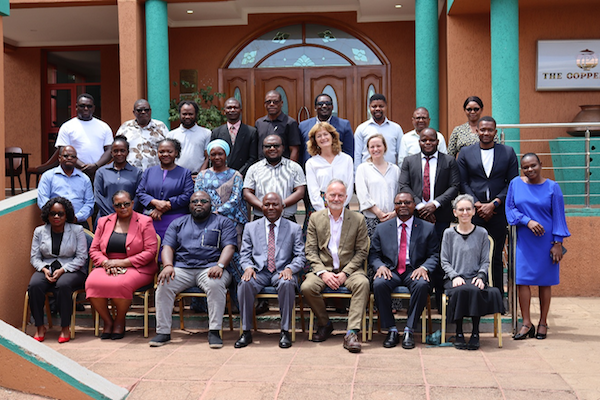
In November 2025, the Public Health Institute of Malawi (PHIM) completed a comprehensive assessment, with the aim of strengthening its core public health functions and informing the next phase of institutional development. The assessment was conducted with financial support from the European Union and the Norwegian government. It was jointly implemented by Deutsche Gesellschaft für Internationale Zusammenarbeit GIZ Malawi and the Norwegian Institute of Public Health (NIPH), with technical collaboration from Africa Centres for Disease Control (CDC) and the International Association of National Public Health Institutes (IANPHI).
The assessment used two complementary tools: the Africa CDC NPHI Maturity Scorecard and the NPHI Staged Development Tool (SDT). The Africa CDC NPHI Maturity Scorecard provides a basis for quantitative scores across NPHI functions and capacities. The SDT supports in-depth discussions and planning in selected priority areas. These tools have been used in other African countries. The Maturity Scorecard had been previously piloted in Botswana, Sierra Leone, and Chad; and 16 African countries have used the SDT. Besides helping PHIM, the sessions provided structured feedback that will contribute to the ongoing refinement of the Africa CDC Maturity Scorecard.
The SDT, co-developed by IANPHI and the U.S. Centers for Disease Control and Prevention, helps NPHIs assess current capacities in internal operations and performance of core public health functions and plan how to reach higher levels of functioning. SDT discussions at PHIM focused on public health research, laboratory capacity, and surveillance.
The Africa CDC and IANPHI tools proved complementary. The Africa CDC Maturity Scorecard offered a quantitative snapshot of maturity levels across governance, surveillance and information systems, workforce development, emergency preparedness, laboratories, and research. The SDT provided opportunities for deeper reflection, dialogue, and contributed to a shared understanding of why certain capacities are at their current stage and what is needed to move forward.
A key lesson from this process was that the value of maturity assessments lies as much in the conversations they stimulate as in the scores they generate. Participants consistently highlighted that the SDT discussions were particularly powerful in surfacing institutional bottlenecks, inter-departmental coordination challenges, and sustainability concerns, while the scoring served as a useful reference point for benchmarking and future comparison.
The findings from the use of the tools are now actively shaping PHIM’s next steps in Malawi and contributing to enabling close partner alignment and coordination. Importantly, the maturity assessment provided PHIM and its partners with a credible, evidence-based baseline that can be used to advocate for further support and track progress over time.